Regretfully, it does and I don’t mean the difference between A, B, C or heaven help us, DD.

They say that we are two countries divided by the same language and this piece is all about giving you the information you need to use American recipes and get them right! It sounds so blinking sensible doesn’t it? Just use 1 cup of flour and 1 cup of sugar, but if you don’t live in the USA and you don’t have access to cup measures, just how big can cup size be?
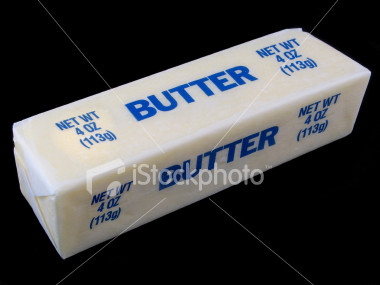 Has it occurred to you that in fact 1 cup of caster sugar is not actually the same weight as 1 cup of soft brown sugar? No, it didn’t occur to me either which is probably why I have had some spectacular disasters using American cookbooks. Also, what on earth is a stick of butter? More and more confusing..
So here is my handy guide for conversion…
| American | Imperial | Metric |
| 1 cup flour 1 cup caster/ granulated sugar 1 cup soft brown sugar 1 cup butter/margarine/lard 1 cup sultanas/raisins 1 cup currants 1 cup ground almonds 1 cup golden syrup 1 cup uncooked rice 1 cup grated cheese 1 stick butter |
5oz 8oz 6oz 8oz 7oz 5oz 4oz 12oz 7oz 4oz 4oz |
150g 225g 175g 225g 200g 150g 110g 350g 200g 110g 110g |
I really hope this helps, just to really confuse you, don’t forget a pint isn’t always a pint! In British, Australian and often Canadian recipes you’ll see an imperial pint listed as 20 fluid ounces. American and some Canadian recipes use the the American pint measurement, which is 16 fluid ounces.
Oh dear, you say tomato and I say…tomato??

 The Bombay Boys
Good spot Kim. In the US, a “cup” is the method of measuring or indeed weighing any item, wet or dry, that will fill a “cup” more or less exactly. So milk, syrup, rice, sugar, raisins (at a stretch) but not potatoes, unless they are mashed or cut into very small chunks, the size of a raisin or smaller say. Clearly, some food stuffs are heavier than others, which results in your handy table. But it’s a little simpler than that. An American cup is defined as 8 US fluid oz, about 250ml, give or take. So, if you don’t have a cup, use the 1/4 litre mark on your (EU) measuring jug, or the 8 fl oz measure of your Imperial Jug. Note that a “cup” is only used where an approximate measure will do, and is not used in buying and selling.
Oh! and by the way, not only are US and Imperial gallons different in size, but also an Imperial fl oz is 0.960759940 of a US fl oz. Not that this matters in the kitchen of course, unless you’re Heston Blumenthal!
Thanks Pete, great information. When can we expect another contribution from you?????